JOIN OUR E-MAIL LIST

Join Our Mailing List
Email:
For Email Marketing you can trust

Tuesday, September 24, 2024

The Best Orchid for Beginners: A Guide from Waldor Orchids


The Best Orchid for Beginners: A Guide from Waldor Orchids

If you're new to the world of orchids and looking for the perfect plant to start your collection, the Phalaenopsis—often called the Moth Orchid—is the ideal choice. At Waldor Orchids, we always recommend Phalaenopsis to beginners, and here’s why:

1. Low-Maintenance Care

Phalaenopsis orchids are incredibly forgiving, making them perfect for those who may not have a green thumb yet. They thrive in typical indoor environments with indirect sunlight, so there's no need for special lighting setups. Just place them near a window that gets some morning or late afternoon light.

2. Beautiful, Long-Lasting Blooms

One of the main attractions of Phalaenopsis is their stunning, long-lasting flowers. When these orchids bloom, the flowers can last for several months, providing continuous beauty in your home. Plus, they often bloom once or twice a year, giving you plenty of opportunities to enjoy their vibrant colors.

3. Simple Watering Routine

Unlike many other orchids that can be tricky to water, Phalaenopsis makes it easy. They prefer to be watered once the potting mix is dry—typically every 7-10 days depending on the environment. This means less risk of overwatering, which is a common issue with other orchids.

4. Great for Indoors

This orchid variety thrives indoors, adapting well to household temperatures and humidity levels. You don’t need a greenhouse or any elaborate setups to grow these beauties successfully.

If you're interested in expanding your collection, Dendrobium and Oncidium orchids are also excellent beginner-friendly choices. They are hardy and can adapt to typical indoor conditions while offering a variety of beautiful blooms.

At Waldor Orchids, we provide a wide range of beginner-friendly orchids and can guide you on your journey to becoming an expert grower. Whether you're looking to start small or dive into a vibrant orchid collection, we’re here to help!


Explore our Phalaenopsis orchids and other beginner-friendly options today at Waldor Orchids.

Thursday, March 20, 2014

Thursday, December 05, 2013

RSS Feed for the blog

Orchid seeds – Nature’s tiny treasures

By: Wolfgang Stuppy - 28/11/2013

Orchids have the smallest seeds in the world and they produce millions of them, but why? Kew's seed morphologist Wolfgang Stuppy explains the clever survival plan that lies behind this seemingly wasteful strategy.

Montage of many colourful orchids
Breathtakingly beautiful and vast in number - with more than 26,000 species, orchids are the largest family of flowering plants, not to mention the more than 100,000 hybrids humans have created. (Photos: Wolfgang Stuppy) 

The biggest seed in the world

Seeds come in all shapes and sizes. Famed for both its volume and suggestive shape, the seed (actually a single-seeded stone) of the Seychelles nut or double coconut (Lodoicea maldivica, Arecaceae) holds the unbeaten record for the world’s largest seed. It can weigh up to 18 kg and resembles something that, while bobbing in the waves of the Indian Ocean, gave sailors in the Middle Ages all kinds of, well, “seedy” ideas.

Photo of a man holding a big Seychelles Nut
Keith Manger, Lab Manager at the Millennium Seed Bank, proudly demonstrating the physical attributes of a Seychelles nut (Photo: Wolfgang Stuppy) 

Seeds like dust

At the other extreme of the spectrum we find the seeds of orchids. Famed for their beautiful and fascinating flowers, with over 26,000 species worldwide, orchids are the largest of all flowering plant families. What’s more, they also hold the world record for having the smallest seeds of all flowering plants. A typical orchid seed is merely the size of a speck of dust. 
Photo montage of orchid flowers and seeds
Top: Flower of Stanhopea Assidensis [= S. tigrina x S. wardii] and seeds of Stanhopea tigrina(0.66 mm long); below: flower and seeds (0.6-0.8 mm long) of the common spotted orchid (Dactylorhiza fuchsii) [Images from SEEDS – Time Capsules of Life by Rob Kesseler & Wolfgang Stuppy; Copyright Papadakis Publisher, Newbury, UK] 
Photo of seeds of the Wild Coco orchid (Eulophia alta)
Top: seeds of the Wild Coco (Eulophia alta), on a British one penny coin. Below: two seeds of the same species in the SEM (the scale bar shows half a millimetre; Photos: Wolfgang Stuppy) 

Tiny ones and not so tiny ones

To give an impression of the dimensions involved: a single capsule of the tropical American orchid Cycnoches chlorochilon produces almost four million seeds, and one gram of seeds of the southeast Asian species Aerides odorata contains 3.4 million seeds. At around 0.2 mm in length, Aerides odorata has the smallest seeds I have ever come across at Kew’s Millennium Seed Bank. According to the literature [Arditti, J. & Abdul Karim Abdul Ghani (2000) Numerical and physical properties of orchid seeds and their biological implications (Tansley Review No. 110).New Phytologist 145: 367-421], there are orchids with even smaller seeds. Those of the New Caledonian species Anoectochilus imitans are said to be the smallest of all, measuring just 0.05 mm in length. At a ‘gigantic’ 6 mm, the seeds of the lopsided star orchid (Epidendrum secundum) are allegedly the longest of any orchid. 
Photo of Acanthephippium splendidum and Aerides odorata seeds  
Top: two seeds of Acanthephippium splendidum measuring c. 3 mm in length. Below left: three seeds of Aerides odorata measuring c. 0.2 mm in length (the scale bar shows half a millimetre; Photos: Wolfgang Stuppy)

Photo of the flower of the bee orchid and seeds of early spider orchid
Left: flower of bee orchid (Ophrys apifera). Right: the seeds of early spider orchid (Ophrys sphegodes) measure a bit more than half a millimetre (c. 0.6 mm) [Images from The Bizarre and Incredible World of Plants by Wolfgang Stuppy, Rob Kesseler & Madeline Harley; Copyright Papadakis Publisher, Newbury, UK] 

Balloon travellers

The reduction in seed size and weight is mainly achieved at the expense of embryo and endosperm, the latter failing to develop in orchids. At the time of dispersal, orchid seeds consist of a spindle-shaped, wafer-thin seed coat that encloses an extremely small and simplified embryo in the shape of a spherical cluster of cells. Just one single cell layer thick, the seed coat (also called testa) forms a balloon around the embryo, a clear adaptation to wind dispersal.
Photo of Clowesia russelliana seed
A seed of Clowesia russelliana, an epiphytic orchid from tropical America, showing the thin, transparent seed coat enclosing a tiny spherical embryo (Photo: Wolfgang Stuppy) 

With a little help from their friends

Because orchid seeds lack a food reserve in the form of an endosperm or a large embryo, most of them, especially terrestrial ones, are generally unable to germinate on their own. They first have to engage in a mycorrhizal relationship with a fungus that helps to feed the emerging seedling. Some orchids are able to join up with many different species of fungi whilst others only accept a very specific fungus to enter their lives (or rather roots). Few orchids don’t need any fungus at all for their germination, such as certain species of Disa from South Africa, a remarkable exception among terrestrial orchids. 
Image of germinated seeds of Encyclia chloroleuca
Seedlings of the neotropical orchid Encyclia chloroleuca growing in a Petri dish. Placed on a nutrient medium under sterile conditions most epiphytic orchids can germinate without their fungal partner. (Photos: Suzie Wood) 

Why so many?

Their dependence on certain fungal partners is most probably the reason why orchids produce vast numbers of tiny seeds. With their small size, low weight and balloon-testa, orchid seeds are perfectly adapted to wind-dispersal. However, their strategy is not to travel long distances. Scattering large numbers of seeds with the wind merely heightens the chances that at least some end up in a place where they are lucky enough to meet their specific fungal partner without which they cannot germinate.
Long-distance dispersal would mean that the same amount of seed is distributed over a larger area which could actually lower the odds of encountering a compatible host in a suitable location. The fact that many orchid species are endemics with very limited distributions supports this theory. This does not mean, however, that their seeds are not able to cover long distances. Orchids managed to reach isolated islands far away from the mainland. As famously documented, they were among the first pioneers to resettle on the islets of Krakatoa after the catastrophic volcanic eruption of 27 August 1883. 
Images of open fruit and seeds of Asian tiger orchid
An open fruit of the Asian tiger orchid (Grammatophyllum speciosum) showing the placenta with some remaining seeds. Top right: close-up of the seeds (scale bar shows 1 mm; photos: Wolfgang Stuppy)
Why so small?
Shedding millions of seeds most of which go to waste, seems very wasteful. However, evolution shows no mercy with wasters and given the orchids’ success, their seed dispersal strategy must pay off. In fact, producing lots of very small seeds with literally no food reserve (apart from some oil droplets and starch grains in the embryo) is energetically inexpensive and doesn’t take up that much of a plant’s energy at all.
The survival benefits of producing millions of tiny seeds clearly outweigh the costs of producing them. Not only orchids prove this point. Other families, like the Orobanchaceae (broomrape family), pursue the same strategy. As parasites, they have a similar problem to orchids: they need to get their seeds to meet the right host partner in order to grow into a new plant. 
Photos of Ivy broomrape and seeds
Left: Ivy broomrape (Orobanche hederae, Orobanchaceae) growing outside the School of Horticulture at Kew Gardens. Right: just under 0.4 mm long, the tiny seeds of this parasite look similar to those of certain orchids but they lack the balloon-like seed coat (Photos: Wolfgang Stuppy) 

Vanilla ice cream and seed morphology

Since we are talking orchids here and most of us love ice cream, here’s a seed morphological nugget for you. Next time you treat yourself to some good quality vanilla ice cream you can discover that the tiny black spots in it are actually real vanilla seeds (in cheap ice cream they might be fake!). Vanilla is made from the fermented fruits (‘pods’) of the vanilla orchid (Vanilla planifolia). That’s how all those seeds end up in your ice cream. Sadly, though, the seeds of vanilla are nowhere near as exciting as those of other orchids. They are just very simple, unexciting looking, tiny black discs. Lacking the transparent balloon-like seed coat so typical of other orchids, their seeds are obviously not wind-dispersed.
In fact, the seed dispersal strategies of vanilla orchids are still enigmatic. The fruits of many Vanilla species, including the ones of V. planifolia, open when ripe to expose their tiny seeds covered in an extremely sticky layer of oil. The oil might serve as an adhesive to attach the seeds to visiting animals, which could either be insects or vertebrates. For example, it has been observed that euglossine bees are attracted by the fragrance of vanilla fruits and act as seed collectors and potential dispersers. 
Montage of Vanilla ice cream and vanilla seed
 Top: Vanilla ice cream (exciting!). Below: scanning electron micrograph of a vanilla seed (not very exciting!) (Photos: Wolfgang Stuppy) 

Orchid seed research at the Millennium Seed Bank

At this point I asked my colleague, Tim Marks, to tell us something about the research into orchid seeds he is involved in at the Millennium Seed Bank and he writes:
'Being wind-dispersed, orchid seeds are naturally dry at release and appear to be desiccation tolerant. The latter is essential for us to be able to preserve them under very dry and very cold (freezing!) conditions, as we do with other seeds in the Millennium Seed Bank.
'Unfortunately, orchid seeds have the reputation to be short-lived under seed banking conditions. Our research is engaged in finding out why this is and how we can extend their survival.
'A basic concept in understanding their specific requirements for storage is to test the relationship between temperature and moisture content upon viability and germination. By running long-term storage experiments with temperatures between -196°C (liquid nitrogen) and +20° (ambient), and a variety of moisture contents, it is possible to identify species-specific requirements.
'Some orchid species prove tolerant to a range of conditions, while others store better in liquid nitrogen. However, to prevent repeating this on all species, we are looking at a number of seed characteristics that could affect this response. One of these is lipid content of the seed, the physical properties of which could affect seed physiology as they go through the freeze and thaw cycles that stored seeds are subjected to. It is possible to produce thermal fingerprints describing the phase transitions between liquid and solid states that these go through, with the intention of developing a predictive model that will describe the observed responses to storage and during germination.' 
Photo of the cryo-storage facility at the Millennium Seed Bank
Our cryo-storage facility at the Millennium Seed Bank where we keep orchid seeds at -196°C (Photo: Wolfgang Stuppy)

-Wolfgang-

Wednesday, November 20, 2013

Humidi-Grow Tray 101 Plant Tray

Humidi-Grow Tray 101
$15.95

Monday, November 11, 2013

Cirr. Elizabeth Ann `Buckleberry' FCC/AOS 4" Pot
$24.95

Monday, October 21, 2013

 
C. Penang `Black Caesar' AM/AOS  
(C. Nigrella x Gur. bowringiana)


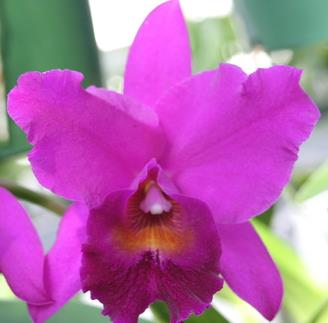
This cattleya is one of those plants that will grow into a outstanding specimen. The flowers are exceptionally shaped, dark lavender and have a magenta lip and a golden throat. The lip on the flower has a feathery texture. Penang is a prolific and fragrant bloomer. Jones & Scully registered this cross in 1963 and this particular cultivar was awarded an 85 point AM/AOS in 1967.
  • 5" pot
  • Blooming size 

Thursday, October 17, 2013

Blc.Harlequin `Elizabeth Off' 4" Pot

Blc.Harlequin `Elizabeth Off' 4" Pot
$24.95
A Waldor Exclusive! Harlequins (flowers fancifully varied in color) are highly sought after for their vibrant colors and picotee (flower whose edge is a different color than the base color) edges. This plant is no exception and an interesting addition to anyone’s collection.  Lightly lemon colored flowers with contrasting bubble gun pink lip. ‘Elizabeth’ normally blooms for Thanksgiving and again at Christmas. This plant came from William Kirsh about 25 years ago. We brought a group and selected this one to clone. 
  • 4" pot
  • Blooming size

Wednesday, October 09, 2013

Blc. Mahina Yahrio `Mishima' AM/AOS 5" Pot
$39.95

Friday, October 04, 2013

Posted by Mary Bates in Weird & Wild on September 25, 2013
It may look pretty, but this “orchid” actually has a trick under its, well, leaves—it’s actually a praying mantis trying to get a meal. 
Until recently, scientists weren’t sure if this flower mimic was accurate enough to deceive bugs. Now, a new study says it is—and it’s the first scientific evidence of an animal imitating a flower to attract prey.

A female orchid mantis makes like a flower. Photograph courtesy Dr. James O’Hanlon, Macquarie University
The orchid mantis’ story goes back to 1879, when Australian journalist James Hingsley came back from Indonesia with tales of a carnivorous orchid that enveloped butterflies in its petals and consumed them alive. Hingsley hadn’t actually discovered an insect-eating flower.  He, like those butterflies, was fooled by the orchid mantis (Hymenopus coronatus). (Watch a praying mantis video.)
For their recent study, scientists James O’Hanlon and Marie Herberstein of Macquarie University in Australia and Gregory Holwell of the University of Auckland in New Zealand went to Malaysia to find out if the orchid mantis’ blossom impression really lured pollinators to their deaths. Herberstein received funding from the National Geographic Society’s Committee for Research and Exploration.
The first challenge for the team was finding orchid mantises in the dense forests of Malaysia. The researchers relied on the knowledge of native Malaysians known as the Orang Asli, who live a traditional lifestyle amidst the forest and knew where the orchid mantises live.
“They likely have an enormous wealth of knowledge about the natural history of the plants and animals of Malaysian rain forests that we scientists have yet to fully appreciate,” said O’Hanlon, whose research will be published in January in American Naturalist.
Once they had obtained a few orchid mantises, the researchers combed the forest for the flower it mimics. But ”we really couldn’t find any flower that looks just like the orchid mantis,” he said. (Also see Glowing Cockroach Mimics Toxic Beetle.”)
Instead, orchid mantises may resemble an average or generalized flower, incorporating several characteristics typical of Malaysian blooms.
Flower Power
The scientists performed two experiments: First, they compared the color of mantises and various native flowers using an instrument called a spectrophotometer, which can measure wavelengths of light that an insect sees, which is outside of the range detectable by human vision.

An orchid mantis is camouflaged on a flower, in Borneo, Malaysia. Photograph by Thomas Marent, Minden Pictures/Corbis
The team found that from the perspective of a pollinating insect, the color of orchid mantises is indistinguishable from a large number of Malaysian flower species.
Next, the research team observed live orchid mantises in the field, counting the number of insects that were attracted to the mantis “flower.” They compared this to the number of insects that inspected an actual flower in the same amount of time.
Their hypothesis was right: They were surprised to find the mantises actually attracted more insects than the real flowers.
There are other animals that use their camouflage to hide among flowers and then ambush prey, but the predatory strategy of the orchid mantis is different. (Watch a video of a female praying mantis biting off the male’s head.)
“The orchid mantises we observed were not hiding amongst flowers, but were sitting on their own against a backdrop of green vegetation,” O’Hanlon said.
“Thus, it was the body of the mantis itself that was attracting the pollinators, and not any flowers in its vicinity.”
Still-Mysterious Mantis
O’Hanlon has more questions about the orchid mantis.
“This was the first-ever study of the orchid mantis, so we’re really only seeing the tip of the iceberg here,” he said.
For instance, O’Hanlon plans to look at the interaction between pollinators and mantises, as well as explore the possibility that the orchid mantis’ mimicry conceals it from predators.
Thanks to the team, this elusive floral faker is beginning to give up its secrets.

Follow Mary Bates on Twitter and Facebook.

Friday, September 20, 2013

Wednesday, August 07, 2013

Centerpieces for your next special occasion.

Dear William,


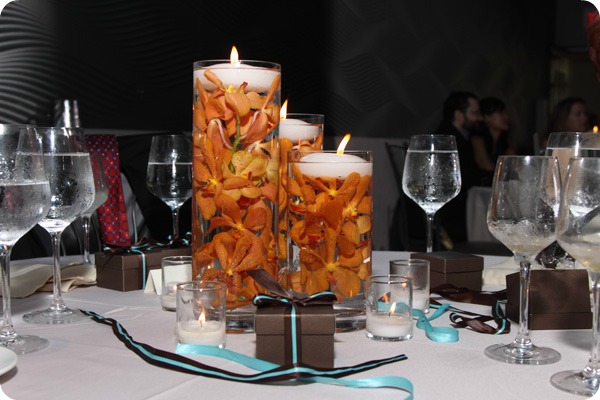
  At Waldor Orchids, we know how important the flower arrangements for your next special event are to you. We can provide plants or centerpieces for your next special occasion. Whether it is a wedding reception, an anniversary or birthday party, a bar mitzvah or bat mitzvah, our decorated plants will add elegance to any celebration.

  We also encourage you to call us for your next charity fund raiser. The centerpieces are often auctioned off at the conclusion of the event or given away to your most loyal supporters. Many times, the money raised by auctioning the plants will greatly exceed the value of the centerpieces, thus increasing the overall income of the fund raiser. 

  Our plants can be decorated in many different ways. We offer glass and ceramic containers, as well as a beautiful assortment of quality baskets. We can use curly willow or sparkling ting-ting in gold, silver or copper. We also have Spanish moss, coconut fiber, or green sheet moss for topping off your containers.

  If you do decide to choose our services, we can offer you professionally trained florists and even customize your packages to suit your every budget.

  Thank you for allowing Waldor Orchids the opportunity to serve your orchid plant needs.


Testimonials: 

  Thank you so very much for the beautiful orchids you sent for my wedding. Ever since I was a little girl I wanted white orchids for my wedding. You truly helped to make my day special. Thank you once again.
Sincerely,
Melinda M., Connecticut


  Thank you so much for the beautiful orchids. They were a big hit at the Barclay Farmstead workshop on growing orchids. All were successfully divided and repotted. I hope we have encouraged some people to begin a new interest in orchid growing.
Many thanks,
Mary E., New Jersey


   Many thanks for the lovely orchids for my mother-in-law's 95th birthday! Your lovely orchids made her day special and she received many compliments! Thanks again for your kindness.
Sincerely,
Barbara D., New Jersey

Sincerely,

William Robinson


Waldor Orchids
10 E. Poplar Ave.
Linwood, NJ 08221
609-927-4127 www.waldor.com
About Us
Waldor Orchids has been a family owned and operated business for four generations. We continue to provide the same quality and old-fashioned service that our customers have grown accustomed to over the years.

Monday, June 10, 2013

Growing Plants with a Humidi-Grow Tray


Many orchids thrive in warm, humid environments. They benefit from sitting on a humidity tray, especially during the winter months when our homes are heated and the air can be quite dry. Humidity trays are the perfect solution to increasing humidity around your plants. As the water evaporates, it raises the ambient humidity around your plants. Refill the water in the tray a few times during the week if there is a lot of sun or if it is particularly warm in your home. Made from rigid polystyrene, plants sit on the upper grid platform and excess water drains into the tray below. The Humidi-Grow Tray allows you to use pots with drain holes without worrying about excess water pouring out and causing structural or furniture damage. The overflow will pass through this pot and collect in the tray where the settled water will evaporate and help offset the loss of transpiration which is the loss of moisture through the leaves. The one thing you want to look out for is that the bottom of your pot (and roots) are not sitting it water. This can be deadly as excess water contributes to root rot.
Root Rot


 These trays are designed for minimal care. Just wash the tray and grid with mild soap and water occasionally, then refill with water.

Tray Sizes:
HT-101 H-2 1/4' x L-13 1/2' x W-10 1/2'
HT-102 H-2 1/4' x L-26' x W-10 1/2'
HT-103 H-2 1/4' x L-29 1/2' x W-13 1/2'

HT-104 H-2 1/4' x L-38 1/2' x W-6 1/2'
HT-105 H-2 1/4' x L-26 1/4' x W-6 1/2"
HT-106 H-2 1/4" x L-26" x W-20"

Check out this video from our friends at Orchid Web

Waldor Ebay Items